
Page Contents
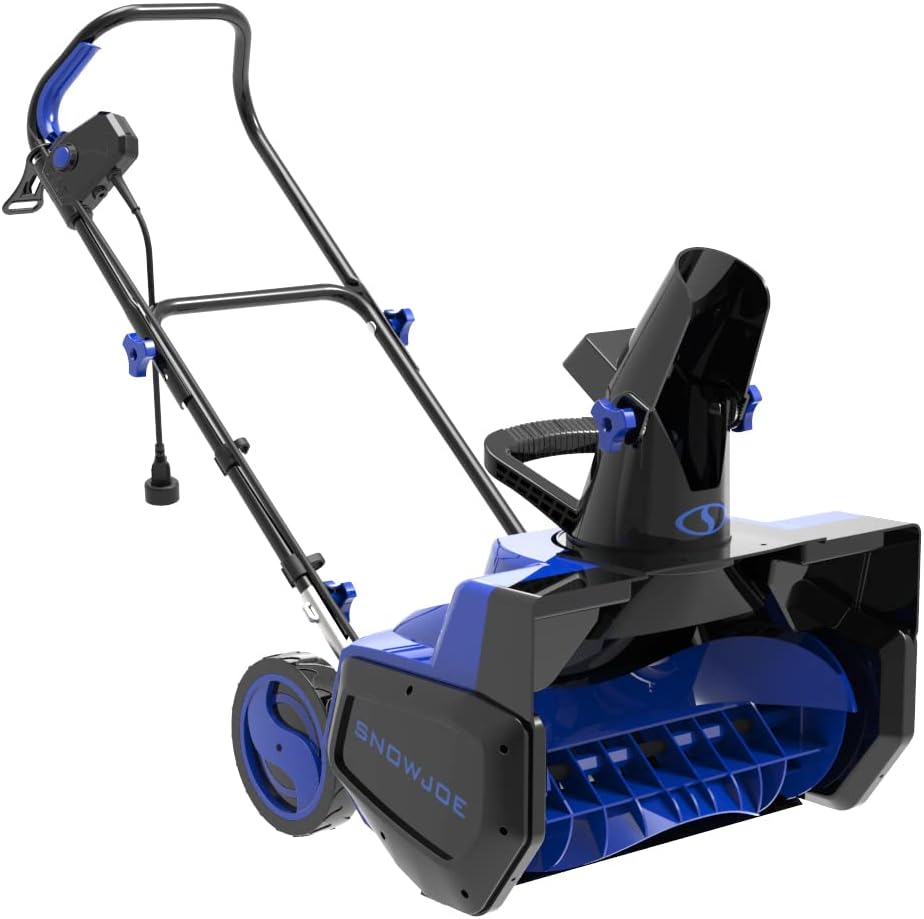
Details: Snow Joe SJ624E-ES Electric Snow Thrower, 21-Inch, 14-Amp
Brand: Snow Joe

Make quick work of winter’s worst with the SJ624E-ES Electric Snow Thrower from Snow Joe®. Boasting a powerful 14-amp motor, this snow-throwing dynamo can move up to 23 tons of snow per hour! The durable auger cuts an extra-wide swath 21-inches wide by 12-inches deep with each pass, so you can clean up large areas fast. Equipped with a 180° hand adjustable chute, SJ624E-ES throws snow up to 20 feet away in any direction. Plus, the scraper blade at the base of the unit clears a path straight to the ground in a single pass, without damaging your deck or pavement! No gas, no oil, no maintenance, no fuss! Delivering the performance of a gas machine with the convenience of electric, the SJ624E-ES is the smart, eco-friendly choice for snow removal this winter. GET EQUIPPED® with the SJ624E-ES Electric Snow Thrower from Snow Joe® and clear out fast from tough winter messes.

Advantages
- Products can be returned
- Make sure this fits by entering your model number.
- [MAINTENANCE-FREE]: No gas, oil or tune-ups make it effortless to start and maintain
- [POWERFUL]: 14-amp motor moves up to 730 lbs. of snow per minute
- [CLEARING PATH]: Cuts a path 21 in. wide by 11.8 in. deep with each pass
- [ADJUSTABLE CHUTE]: 180 Degree adjustable Chute throws snow up to 20 ft. away
Notice
- Is an online purchase
- Delivery may be delayed in some areas.

Buyer Guide Snow Blowers
Snow blowers make snow removal a whole lot easier. I strongly suggest you read this guide before buying a snow blower.- Features. Snow blowers can vary so widely in terms of power, size, and ease of use. Take the time to learn what features you need, and which features don’t interest you.
- Power. Snow blowers tend to be rated both in kilowatts and in horsepower. kilowatts (kW) indicate the amount of electricity the snow blower uses, while horsepower (HP) indicates the amount of power the motor produces.
- Size. Snow blowers come in a wide range of sizes. Of course, size will depend on your intended use of the snow blower.
- Fuel Type and Fuel Capacity. Snow blowers normally need to be refueled at some point. Some snow blowers offer a push-button refueling method, while others require a hose.
- Ease of Use. If you’re going to be using a snow blower very often, its ease of use should be one of the first features you consider.
- Weight. Snow blowers tend to be heavy, so it’s important that you know how heavy they snow blower is.
- Price. Snow blowers aren’t cheap. They’re also not cheap to operate. So, before you purchase a snow blower, make sure you know exactly what you’re
How to choose Snow Blowers
- Engine Size – the engines sizes are measured in cubic centimeters or cubic inches
- Horsepower – an engine’s horsepower is determined by multiplying the engine’s cubic centimeters by 37.3
- Variable Speed – if this feature is on your snow blower, the forward speed of the snow blower can be adjusted up and down
- Handling – for heavy snow, a snow blower’s handles should be large and easy to grab
- Power Steering – this helpful feature makes moving the snow blower around easier
- Chute – the chute is where the snow is ejected from the snow blower
- Reciprocating – snow blowers with a power stroke feature, like the Thomas engine auger, rely on reciprocation of motion
- Substitution – to find out if your snow blower can be used in the winter, check the manual that comes with the snow blower or call us
- Snow Tires – snow tires should be larger than regular tires to ensure proper traction
How to maintain Snow Blowers
- Oil your Snow Blower – the best oil is WD40
- Check all belts and tighten them
- Check the water – if it’s dirty, clean it with a wire brush or hose it off
- Check the spark plug – make sure it’s clean and waterproofed
- Check the carburetor – it needs to be cleaned with a wire brush and sprayed with WD40
- Check the air filter – clean it with a wire brush and spray with WD40
- Change the oil and spark plug
- Check the tires – make sure they have enough air
Related posts:
