
Page Contents
Details: Meyer 25000 Plow
Brand: Meyer
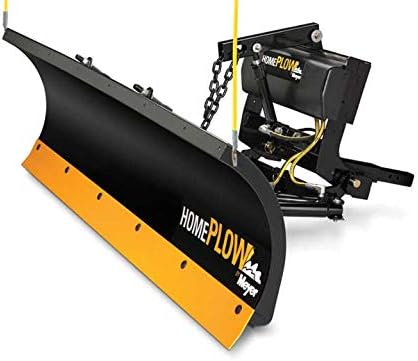
Perfect for clearing long driveways fast and easily. It quickly attaches to light pickups, SUVs and utility vehicles using a Class 3, 2 -inch front receiver hitch (receiver hitch sold separately). The up/down motion of the moldboard is controlled by a hydraulic power unit, activated by a wireless key fob. The right/left motion of the plow is controlled by the Home Plow’s patented Auto-Angling system. Unlike other small snowplows, there is no need to get out of the cab to manually adjust the plow blade. It takes seconds to attach or remove the Home Plow with the exclusive Quick-Link System. When the plow is not attached, there is no visible hardware on your vehicle. The Home Plow comes fully assembled with integrated mounting wheels that make it easy to remove and store. (The Home Plow by Meyer is for homeowner use only).

Advantages
- Products can be returned
Notice
- Is an online purchase
- Delivery may be delayed in some areas.
Buyer Guide Snow Plows
If you’re buying snow plows, this guide will provide you with some handy tips.- Consider Your Yard Size. Snow plows ought to be used for streets (and sidewalks) that are at least 60 feet (18m) wide.
- The Plow. When buying a snow plow, bear in mind that the plow’s width should be equal to or wider than the plow’s length.
- Plow Blades. The plow blades should move easily and should spread the snow over a larger area.
- Adjustability. You need a snow plow that can be adjusted easily.
- Storage. Snow plows are designed to be compact for easy storage.
- Plow Alternatives. A snowblower, for example, is an option that you should consider.
How to choose Snow Plows
When choosing a snow plow, there are a few important factors to keep in mind:- The size and width of the snow plow. Snow plows with wider blades and more aggressive plowing can cut through more snow in less time. Still, it’s important to keep in mind how wide the snow plow is in relation to your vehicle.
- The height of the snow plow. Snow plows typically range from four to eight feet in height.
- The weight. Snow plows can vary in weight from 300 to 500 pounds.
- The blade width. Snow plow blades are usually between three and four feet wide. If you have narrow shoulders, you may need a wider blade.
- The blade angle. The angle of the blade of a snow plow is important, as it can help direct snow in different directions. Angles can range from 15 and 45 degrees.
- The plowing pattern. Plowing patterns include straight, diagonal, and curved.
- The plow width. The width of the plows can range from 30 to 60 inches.
- Blade material. Blades are usually made of steel or aluminum.
- The plow controls. Plow controls typically include a throttle, a parking brake, and a singular lever.
- The plow attachment. The plow attachment is the part that attaches to the snow plow.
- The plow manufacturer. Snow plow manufacturers include Ariens, Bobcat, Husqvarna, SnowEx, and Toro.
- The plow warranty. Its important to check the warranty of any new snow plow you consider purchasing.
How to maintain Snow Plows
Snow plows are an important piece of machinery for any snow removal company. Snow plows are specifically made for efficiently moving large amounts of snow that have accumulated on a road.Snow plows generally consist of a large blade on the front, a chain or sprocket on the back, and a set of large wheels to roll the plow along. Snow plows can be powered by diesel fuel, gasoline, or electricity, and each vehicle type has its advantages and disadvantages.
Diesel-fueled vehicles are generally more powerful and can plow through snow more quickly than gasoline vehicles, but diesel is more expensive and pollutes the air. Gasoline-powered vehicles are slightly cheaper, but their power is more restricted. Electric-powered vehicles are the cheapest option, but their limited range makes them impractical.
In addition to the vehicle type, there are other important features you should consider when purchasing a snow plow.
- The blade: The blade on your vehicle is important and should be replaced regularly. Blades can be made out of steel, stainless steel, or aluminum. Steel and stainless steel blades are less expensive but require more frequent sharpening. Aluminum blades are more expensive but require less frequent sharpening.
- The plow: The type of plow on your vehicle can have a big effect on its performance. The two main types of plows are straight and angled. Straight plows plow straight down and are most commonly used in residential areas. Angled plows move from side to side, and are most commonly used in commercial areas.
- Hydraulics: Hydraulics allow the plow to move up or down, from side to side, or spin. Most snow plows come with hydraulics, but be sure to check before you buy. Hydraulics are important because they allow you to adjust the height of the blade from 0 to 2 feet, which allows you to clear snow from even the narrowest of roads.
Related posts:
Review SAVITA 10pcs 0.5x0.25x1.6in Shear Pins for Snowblower and 10pcs Cotter Pins Replacement Parts...
Review Meyer Products 7548 Plows and Accessories
Review Ignition Coil Module For Troy Bilt 31as2p5c711 Snow Thrower with 208cc engine
Review The ROP Shop | Heavy Duty Snowplow Upgrade Kit for Fisher Hydraulic Plow Straight Blade
