
Page Contents
Details: WARN 80954 Tapered Plow Blade, 54″ Length, Yellow
Brand: WARN
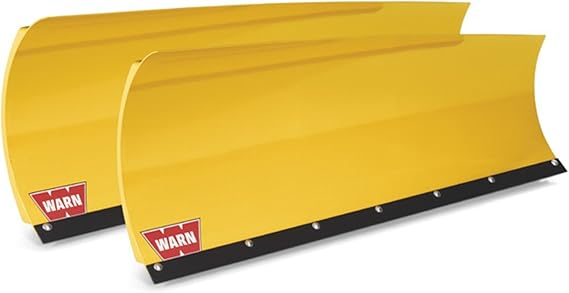
The WARN 80954 ProVantage 54″ Tapered Plow Blade design offers an aggressively curved profile to move snow or dirt up and away from the surface you are clearing. A special low-friction powder coated finish helps keep material from sticking to the blade. The thick, sturdy wear bar has steep angle of attack for maximum surface scraping. It is designed to fit with the WARN ProVantage plow system on your ATV and includes skid feet and brake-over springs.

Advantages
- Products can be returned
Notice
- Is an online purchase
- Delivery may be delayed in some areas.


Buyer Guide Snow Plows
Snowplows are one of the most useful winter accessories out there.- Capacity. Snowplows mean different things to different people. For example, a 10-inch plow may be ideal for a residential driveway, but a 12-inch plow may be ideal for a commercial parking lot.
- Width. Width affects plowing capacity. A plow that’s 12 inches wide will clear more snow in comparison to the one that’s 10 inches wide.
- Turning Radius. Most plows allow you to turn them in any direction.
- Height. Most plows adjust between 30 inches and 60 inches.
- Weight. Plows weigh from 60 pounds to 150 pounds or more, depending on the model.
How to choose Snow Plows
When choosing a snow plow, there are a few important factors to keep in mind:- The size and width of the snow plow. Snow plows with wider blades and more aggressive plowing can cut through more snow in less time. Still, it’s important to keep in mind how wide the snow plow is in relation to your vehicle.
- The height of the snow plow. Snow plows typically range from four to eight feet in height.
- The weight. Snow plows can vary in weight from 300 to 500 pounds.
- The blade width. Snow plow blades are usually between three and four feet wide. If you have narrow shoulders, you may need a wider blade.
- The blade angle. The angle of the blade of a snow plow is important, as it can help direct snow in different directions. Angles can range from 15 and 45 degrees.
- The plowing pattern. Plowing patterns include straight, diagonal, and curved.
- The plow width. The width of the plows can range from 30 to 60 inches.
- Blade material. Blades are usually made of steel or aluminum.
- The plow controls. Plow controls typically include a throttle, a parking brake, and a singular lever.
- The plow attachment. The plow attachment is the part that attaches to the snow plow.
- The plow manufacturer. Snow plow manufacturers include Ariens, Bobcat, Husqvarna, SnowEx, and Toro.
- The plow warranty. Its important to check the warranty of any new snow plow you consider purchasing.
How to maintain Snow Plows
Snow plowing can take a toll on your vehicle, which is why many snow plow companies will suggest scheduling maintenance checks before winter sets in. Before heading out to the shop, take a look at these tips from Consumer Reports on maintaining your snow plow:- Make sure your snow plow is in good working order before winter arrives by inspecting the blades for cracks or chips. You should also inspect all of the lift mechanisms, including the auger, chute, and winch.
- Check all of the hydraulic lines for signs of leaks, and be sure to have the snow plow fluids changed.
- Inspect the tires and wheels for signs of wear, including cracks, bulges, or holes.
- Check the lamps and reflectors to make sure theyre in working order.
- Make sure the plow is operating properly.
- Check the hydraulic system and fluid level.
- Fill the hydraulic system with clean, new fluid.
- Inspect the hydraulic system again before winter.
- Reinstall the plow according to the manufacturers instructions.
- Check to make sure the plow is in good working order before winter.
- Clean the plow prior to storing it.
- Cover the plow to protect it from the elements.
- Move your plow over to a shaded area.
- Move the plow into a shed or covered area, if possible.
- Remove the plow during the winter and store it in a shed or covered area until spring.
Related posts:
Review UpStart Components 2-Pack 935-04054A Friction Wheel Replacement for Yard Machines 31AS63EE752...
Review B.O.S.Part Buyers 1315315 Harness Repair Kit for fFisherr/wWesternn Snowplows 49308 & 49317
Review EGO Power+ SNT2100 21-Inch 56-Volt Cordless Snow Blower - Battery and Charger Not Included & ...
Review Technology Parts Store Auger Drive Belt 313847MA Compatible with Craftsman Snow Blower Model ...

FBIA TEAM
Admin Tle Chubby man who loves technology and the changes in the world around him. (Around Me)